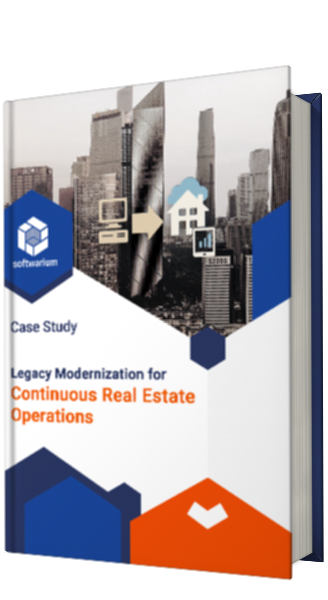
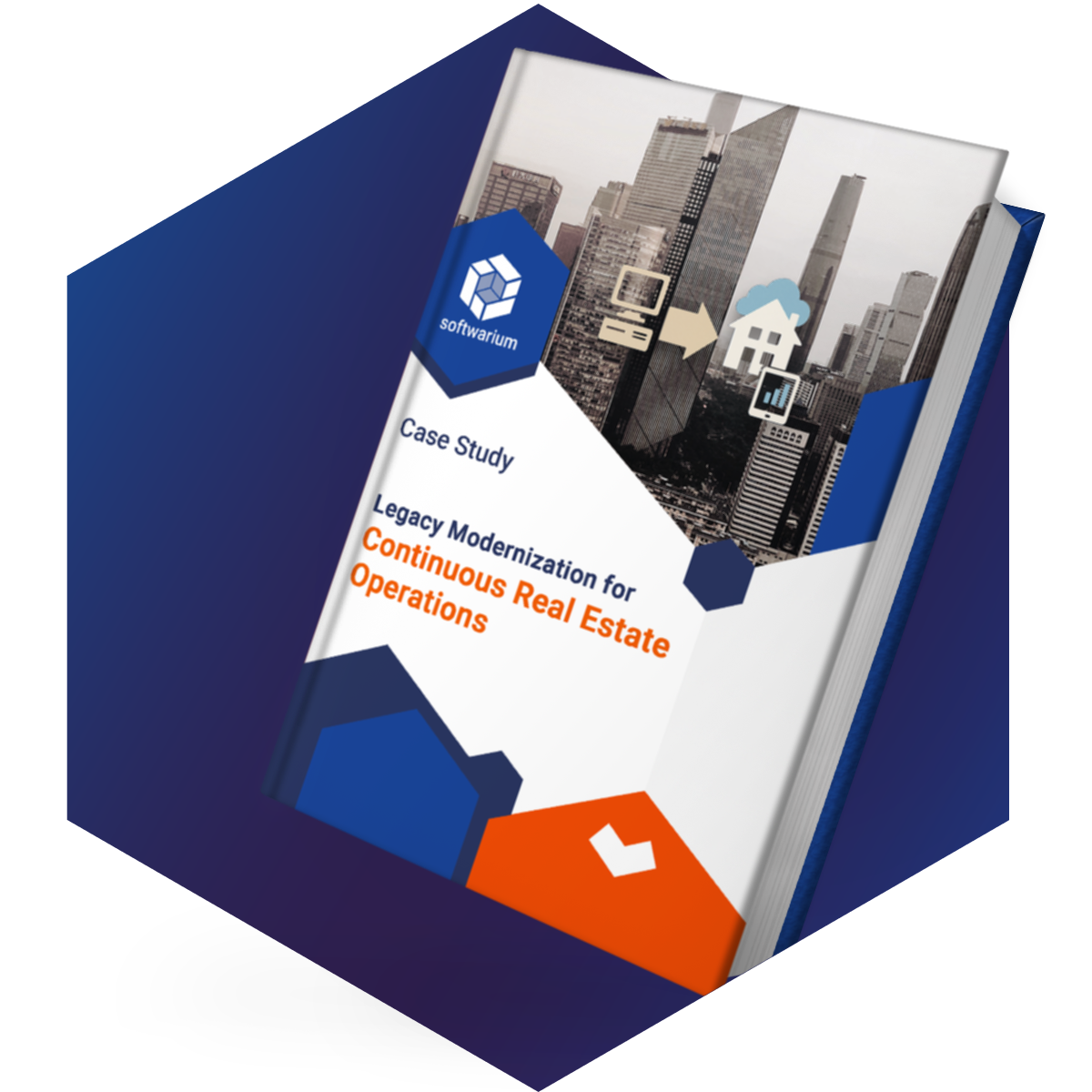
Legacy Modernization for Continuous Real Estate Operations
About ProTitleUSA
ProTitleUSA is a leading U.S. provider of title search and analysis services, covering both residential and commercial real estate markets nationwide.
With its headquarters in Pennsylvania and offices across six states, the company manages thousands of title requests daily through a secure, technology-driven process.
Its digital platform already supported online ordering, API access, and real-time document tracking, establishing ProTitleUSA as a technological leader in its space.
However, parts of the existing system, which was originally built on .NET Framework WebForms, had reached their architectural limits. The platform remained stable but could no longer integrate modern AI modules, support scaling needs or meet evolving security standards.
The Challenge
Modernizing a live, business-critical system used daily by employees and clients across the U.S. was challenging to say the least. ProTitleUSA needed to transition from its legacy WebForms solution to a modern, modular web architecture and all this without disrupting nationwide operations.
The challenges were significant:
Ensuring 100% uptime
after all title search and order processing could not be interrupted.

Untangling complex legacy dependencies
between tightly coupled backend logic and frontend UI layers.

Outdated technology stack
(.NET Framework WebForms, on-prem SQL Server) limiting flexibility and integration potential.

Strict security and compliance requirements
for legal and financial data management.
Every migration step had to be carefully designed, tested, and deployed while the system stayed fully operational.
Our Approach
Softwarium’s modernization team developed a step-by-step migration roadmap that balanced stability with innovation.
The process unfolded in three structured phases:

1. Assessment & Planning
- Full mapping of the legacy WebForms application, database dependencies, and integration points.
- Identification of reusable business logic to minimize redevelopment.
- Establishment of a phased migration plan ensuring the old and new systems could run in parallel.
2. Gradual Refactoring & Replatforming
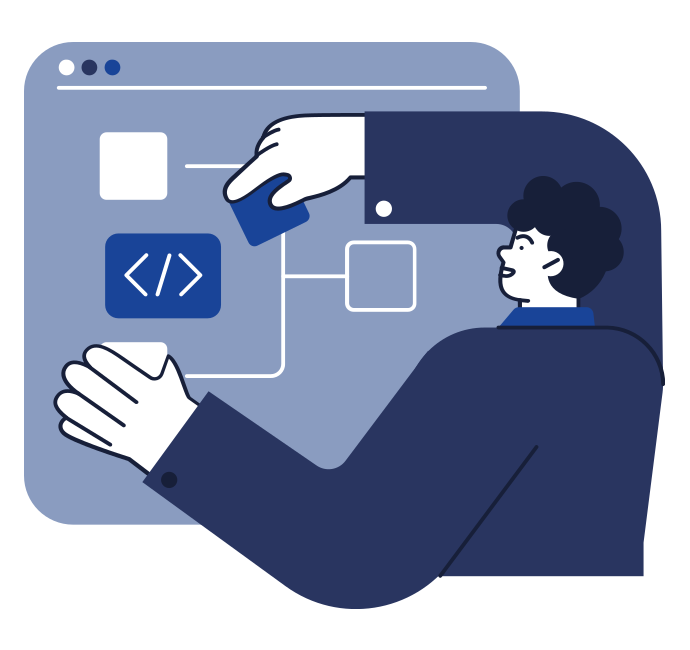
- Migration from .NET Framework WebForms → Angular (frontend) + .NET Web API (backend).
- Complete redesign of the frontend into a modern Angular single-page application (SPA) built with TypeScript, featuring reusable components and modular routing.
- Backend refactored into RESTful APIs using .NET 6, separating business logic from presentation layers for maintainability and future AI integrations.
- Deployment of all services inside Docker containers for consistency, isolation, and easy rollback.
- Smooth data connectivity with the existing MSSQL database, maintaining full data integrity throughout migration.

3. DevOps & Monitoring Enablement
- Implementation of CI/CD pipelines
- Automated testing and code quality checks to ensure stable, incremental releases.
- Real-time performance and error monitoring
This phased approach ensured continuous modernization with zero downtime. Together we developed a process where new modules went live while legacy ones were gradually decommissioned.
The Solution
The final architecture combined the reliability of the legacy system with the flexibility and scalability of a modern web platform.
Key Outcomes:





Impact

Zero downtime during transition
100% of operations continued seamlessly, despite being updated while being live

30% faster response times after API and database refactoring.

Significantly improved security through role-based access, encryption, and logging.

Cloud-ready architecture that scales on demand and supports continuous deployment.

Future-proof foundation ready for AI, automation, and predictive analytics integrations.
Softwarium’s modernization turned an aging system into a future-ready, cloud-enabled platform that powers ProTitleUSA’s nationwide operations with speed, stability, and confidence.
Technical Snapshot
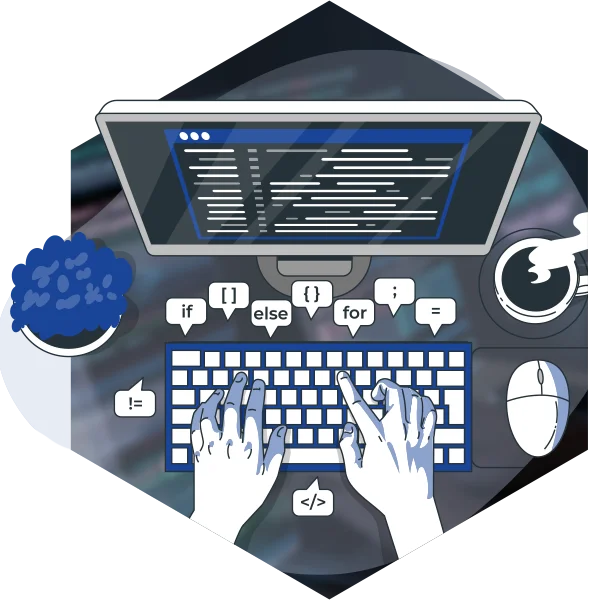
Legacy System
Frontend: .NET Framework WebForms
Backend: Monolithic codebase
Deployment: Manual releases and server maintenance
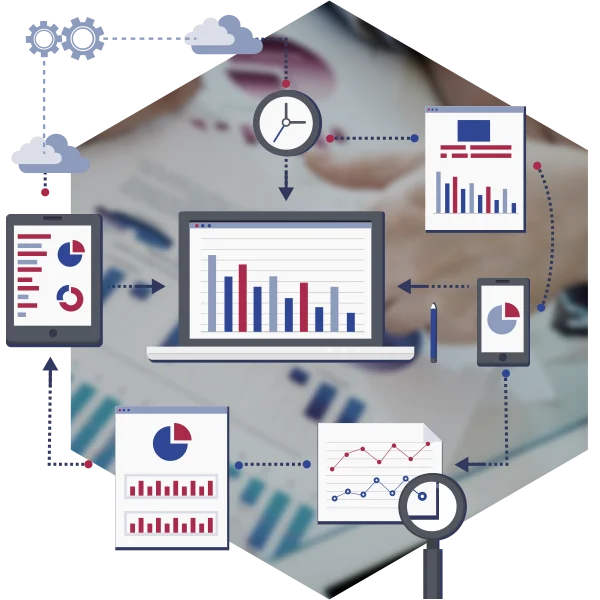
Modernized Architecture
Frontend: Angular (TypeScript) single-page application
Backend: .NET 6 Web API (modular, RESTful services)
Database: MSSQL (optimized queries, indexing, and partitioning)
Infrastructure: Docker containers (frontend, backend, background jobs)
Monitoring: Sentry for logs and performance insights
Security: Role-based access control (RBAC), TLS encryption
Before & After: Modernization in Motion
| Aspect | Before Modernization | After Modernization |
|
Architecture |
Monolithic WebForms system tightly coupled to UI. |
Decoupled Angular + .NET Web API architecture. |
|
Frontend UX |
Server-rendered pages, limited interactivity. |
Responsive Angular SPA with dynamic dashboards. |
|
Deployment |
Manual updates requiring downtime. |
CI/CD Docker-based deployments with zero downtime. |
|
Performance |
Slow under high load, outdated async handling. |
Optimized APIs and frontend caching for 30% faster load times. |
|
Integration |
Difficult to connect AI and OCR modules. |
RESTful APIs built for rapid integration and scalability. |
|
Security |
Basic encryption and logging. |
Enterprise-grade RBAC, encryption, and continuous monitoring. |
|
Scalability |
Limited horizontal scaling. |
Docker containers implemented for various components. |
In Summary
By migrating from .NET WebForms to Angular and .NET Web API, Softwarium preserved the company’s operational stability while unlocking modern scalability, performance, and integration potential.
The project demonstrates how careful evolution-like modernization fuels innovation while speeding up operations. Every release was tested, containerized, and deployed without a single hour of downtime.
Today, ProTitleUSA runs on a future-proof platform ready to embrace the next generation of AI, analytics, and automation across the real estate industry.
Legacy Modernization for Continuous Real Estate Operations
Discover how Softwarium preserved the ProTitle’s operational stability by modernizing the Real Estate and LegalTech player processes.
Case Study PDF
Sneak Peek, Technological Stack and more